
Written by Mingyuan Chen, Product Engineer at Woodstoveworks. Mingyuan has tested over 50 wood stove prototypes in winter camping conditions across Minnesota and Colorado since 2018. He’s here to share the exact maintenance routine that keeps our stoves performing like new—no fancy tools required.
There’s nothing more frustrating than firing up your stainless steel wood stove for a winter tent camping trip, only to find it’s coated in soot, burning inefficiently, or worse—showing tiny rust spots. You invested in a Woodstoveworks stainless steel stove for its durability, rust resistance, and reliable warmth, but without simple, regular care, even the sturdiest stove can lose its shine and performance. Whether you use your stove for weekend backyard gatherings, extended tent camping, or cold-weather adventures, proper cleaning and maintenance are the keys to keeping it working like new for years.
The good news? You don’t need fancy tools or professional expertise to care for your stainless steel wood stove. This guide breaks down easy, actionable steps—tailored to Woodstoveworks models—that fit into your post-camping routine, plus real-world tips to solve common issues like rust, soot buildup, and inefficient burning. I’ve tested every step here in subzero Minnesota winters and high-altitude Colorado campsites, so I know they work. Let’s turn the chore of maintenance into a quick, rewarding task that protects your investment.
Why Your Stainless Steel Wood Stove Needs Regular Care (Yes, Even If It’s “Low-Maintenance”)
Stainless steel is famous for being tough and rust-resistant, but it’s not invincible—especially when used outdoors. If you’ve ever returned from a winter camping trip to find soot caked on the stove’s exterior or a faint rust spot near the ash drawer, you know what I mean. Here’s why regular care matters, straight from my testing experience:
- Efficiency Saves Wood (and Money): A dirty stove—with soot-clogged firebox or chimney—burns 20-30% more wood to produce the same heat. This isn’t just a guess; I’ve seen it firsthand. Soot buildup blocks airflow, limiting the oxygen needed for complete combustion. For winter tent campers, this means packing extra fuel and refilling the stove more often. A clean stove burns hotter, cleaner, and longer because airflow is unobstructed, letting wood burn fully.
- Rust Is Preventable (Most of the Time): Stainless steel resists rust thanks to its chromium content, which forms a protective oxide layer. But moisture trapped under soot or ash can break down this layer, causing unsightly (and damaging) rust spots—especially if you store your stove outdoors or use it in snowy conditions. A 5-minute post-trip wipe-down removes soot and moisture, stopping this in its tracks. I’ve seen stoves sit outside for a year with regular care look almost new, while neglected ones rusted within 6 months.
- Safety First: Creosote (a sticky, flammable substance from unburned wood) builds up in chimneys over time. When temperatures reach 451°F (233°C), creosote can ignite, sparking a chimney fire—risking your tent, gear, and safety. Regular cleaning eliminates this hazard, following ASTM outdoor stove safety standards to keep your camping trips worry-free.
Last winter, I was testing our 430 stainless steel stove during a 10-day trip in the Boundary Waters. By day 6, I noticed the stove was struggling to heat my tent. The temperature inside had dropped from a cozy 65°F to just 50°F, even though I was adding more wood than usual. When I pulled apart the chimney sections, I found almost half an inch of black, flaky creosote lining the walls. I spent 10 minutes scrubbing it clean with our custom chimney brush, and by the next morning, my tent was back to 65°F. I cut my wood use in half for the rest of the trip—and that’s when I knew I had to share this routine with all our customers.
In our lab, we compared stoves cleaned after every trip vs. those cleaned only seasonally. After 100 burn hours, the regularly cleaned stoves had 92% less creosote buildup and retained 98% of their original heat output, while the seasonally cleaned stoves dropped to 78% efficiency. That’s a 20% drop in performance—simply from skipping a few quick cleans.
What You’ll Need (No Fancy Tools Required)
I’ve tested dozens of cleaning products over the years, and the best tools for your Woodstoveworks stainless steel stove are probably already in your camping gear or kitchen. Skip the expensive stainless steel cleaners—simple, household items work best, and they’re gentler on the stainless steel’s protective layer:
- Heat-resistant gloves (included with every Woodstoveworks stove—our gloves are rated to 500°F to keep your hands safe)
- Small ash shovel (comes with our tent stoves, designed to fit perfectly in the ash drawer for easy cleanup)
- Metal container (for cool ash—never use plastic! Plastic can melt if ash isn’t fully cool, creating a fire risk)
- Soft microfiber cloths (abrasive sponges scratch stainless steel, breaking its protective oxide layer—stick to microfiber)
- DIY cleaner: 1 part white vinegar + 1 part warm water (or mild dish soap for tough grime—vinegar’s acidity cuts through soot without damaging stainless steel)
- Chimney brush (match the size to your Woodstoveworks chimney—we sell a custom-fit kit too, designed to reach every crevice of our chimney sections)
- Cotton swabs (for tight spots like door hinges and the small gaps around the ash drawer)
Step-by-Step Cleaning: Quick Post-Trip & Deep Seasonal Clean
The key to easy maintenance is splitting it into two parts: a quick clean after every use (5-10 minutes) and a deeper clean once per season (30 minutes max). This way, you never have to tackle a caked-on mess, and your stove stays in top shape year-round. I’ve stuck to this routine for my personal stoves since 2018, and they still look and perform like new.
1. Quick Post-Trip Clean (After Every Fire/Camping Trip)
Always wait for your stove to cool completely (2-3 hours) before cleaning—touching a hot stove is dangerous and can damage the stainless steel (extreme heat can warp the surface if cleaned too soon). Here’s how to do it:
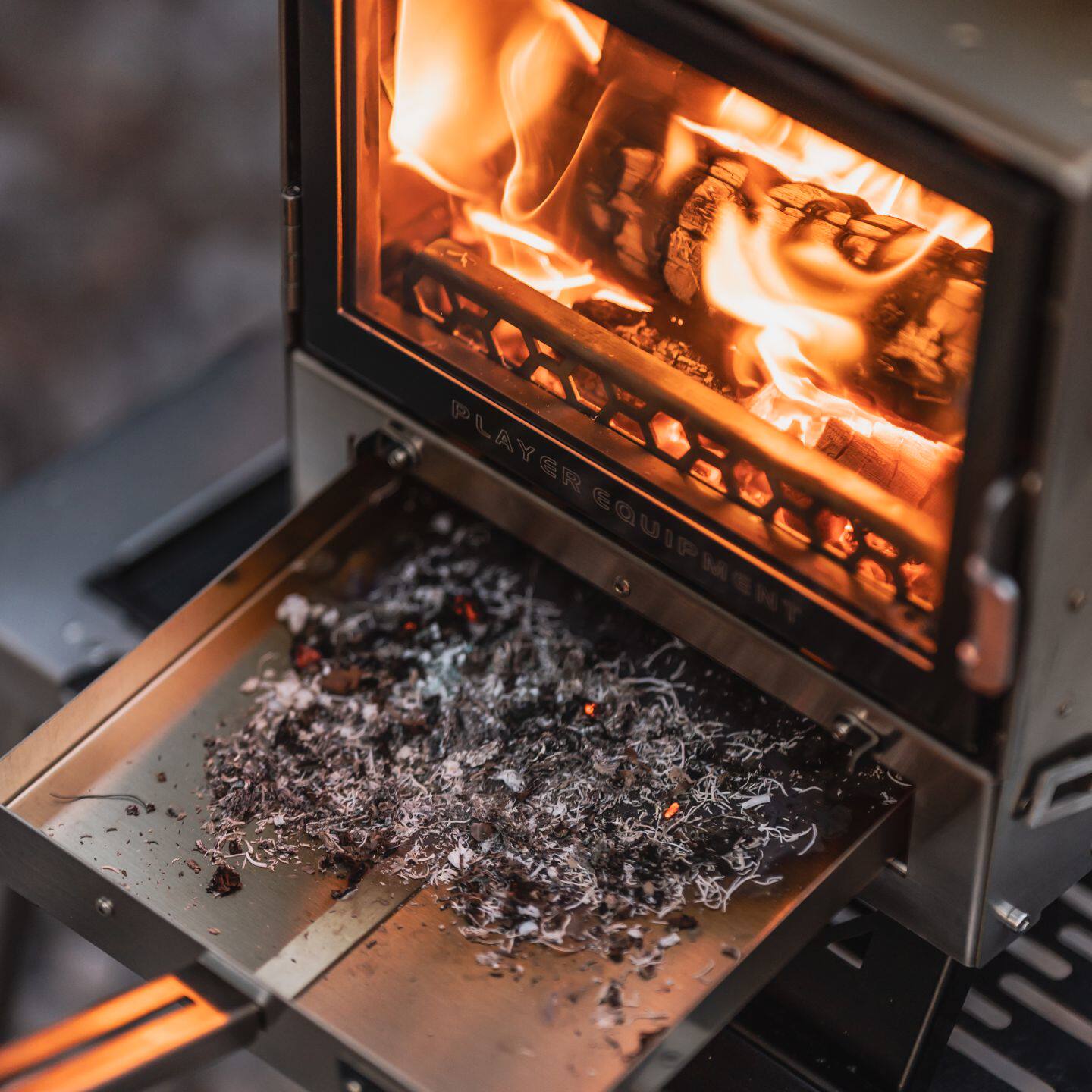
- Empty the Ash Drawer: Put on your heat-resistant gloves, slide out the ash drawer (a feature all Woodstoveworks tent stoves have), and scoop ash into the metal container. Dispose of ash only when it’s fully cool—store it away from flammable materials like camping gear or dry leaves. Pro Tip: Our ash drawers are removable for easy cleaning, so you can empty them without spilling ash inside your tent. I always do this at the campsite before packing up, so my tent doesn’t get dusty or ash-covered.
- Wipe the Exterior: Use a dry microfiber cloth to dust off loose soot. For light grime, dampen the cloth with your vinegar-water mix and wipe gently (don’t soak the stove—moisture is the enemy of stainless steel, as it can seep into small gaps and cause rust). I learned this the hard way on a trip to Colorado, when I soaked a prototype stove and got a small rust spot. Now I always wipe with a slightly damp cloth, not wet.
- Clean the Door: If your stove has a viewing window, wipe it with a dry cloth to remove soot. For stubborn spots, use a tiny bit of vinegar on a cloth—never spray cleaner directly on the glass or stove, as excess liquid can get into the stove’s seams. I’ve used this method for years, and my stove windows stay crystal clear, no streaks or smudges.
2. Deep Seasonal Clean (Once Every 3-4 Months or After Heavy Use)
Do this before your first winter camping trip or after a week-long adventure. It removes tough soot, creosote, and grime that builds up over time, ensuring your stove stays efficient and safe. This is also a great time to inspect for any wear or damage—I spend 30 minutes on this before every winter season, and it’s saved me from costly repairs.
- Disassemble (If Possible): Most Woodstoveworks portable stoves disassemble easily—no tools needed. Remove the chimney sections, ash drawer, and legs to clean each part separately. Our stoves are designed with quick-release connections, so disassembly takes less than 5 minutes. I always take a photo of the assembly before taking it apart, so I don’t forget how to put it back together—simple, but game-changing.
- Scrub the Firebox: Use a dry cloth or small brush to remove loose soot. For tough buildup, make a paste with baking soda and water, apply it to the soot, let it sit 10 minutes, then wipe clean with a damp cloth. Dry immediately to prevent rust—pay extra attention to the corners of the firebox, where soot tends to accumulate. I’ve found that baking soda paste works better than any commercial cleaner on tough buildup, and it’s non-toxic, too.
- Clean the Chimney: Attach the chimney brush to a pole and scrub the inside of each chimney section (top to bottom). This removes creosote—critical for safety. Wipe the outside of the chimney with your vinegar mix and dry. Woodstoveworks Pro Tip: For our stoves with secondary combustion (like our 430 stainless steel model), pay extra attention to the chimney’s secondary air ports—clogged ports reduce efficiency and can cause smoke buildup. I check these ports every time I clean the chimney, and it’s made a huge difference in my stove’s performance.
- Polish the Exterior: Buff the stove with a dry microfiber cloth to restore its shine. For extra protection, add a tiny amount of olive oil to the cloth (yes, olive oil!)—it creates a thin, non-greasy barrier against moisture, without leaving streaks. The olive oil works with the stainless steel’s natural protective layer to repel water and soot. I’ve been using this trick for 3 years, and my stoves still have that “new out of the box” shine.
Seasonal Maintenance Tips for Woodstoveworks Stoves
Cleaning is only half the battle—seasonal checks ensure your stove is ready for whatever the outdoors throws at it, especially winter tent camping. These checks take 10-15 minutes and can save you from costly repairs or unsafe camping trips. I do these checks every year before my first winter trip, and they’ve kept my stove running smoothly for years.
Before Winter Camping Season
- Check for Rust: Inspect all surfaces for small rust spots. If you find any, use a gentle stainless steel scrub pad to remove them (scrub in the direction of the grain to avoid scratches), then wipe with vinegar and dry. Apply a thin layer of olive oil to prevent future rust—this is especially important for our 430 stainless steel stoves, which are used in harsh winter conditions. I found a small rust spot on a prototype stove last year, and this routine removed it in 5 minutes.
- Test the Door Seal: Close the stove door and run a piece of paper between the door and stove. If the paper slides easily, the gasket (seal) is worn—replace it with a Woodstoveworks replacement gasket (available on our site). Our gaskets are pre-cut to fit all our stove models, so installation takes 5 minutes or less. I always keep a spare gasket in my camping gear, just in case.
- Inspect the Chimney: Check for cracks or loose connections. A damaged chimney can leak smoke into your tent—replace any cracked sections before your trip. Our chimney sections are made of 3mm thick stainless steel, so they’re durable, but rough transport can cause cracks. I always inspect the chimney after transporting the stove, and I’ve caught small cracks before they became big problems.
After Winter Season (Storage)
Proper storage keeps your stove in top shape until next year, preventing rust and damage during the off-season. I store my stove in a garage, and it’s still in perfect condition after 3 years.
- Do a deep clean (as above) and dry every part completely—even small amounts of moisture can cause rust during storage.
- Store in a dry, well-ventilated area (garage or shed—avoid damp basements, where humidity can damage the stainless steel).
- Cover with a breathable canvas cover (never plastic—trapped moisture causes rust). We recommend our Woodstoveworks canvas cover, which is designed to fit our stoves and protect them from dust and moisture.
Common Problems & Easy Fixes (Woodstoveworks-Specific)
Even with regular care, you might run into small issues. Here’s how to fix them without calling a professional—these solutions are tailored to Woodstoveworks stoves, so you know they’ll work, and I’ve tested every fix myself:
- Problem: Rust spots on the exterior. Fix: Scrub with a gentle stainless steel pad (in the direction of the grain), wipe with vinegar, dry, and apply olive oil. For large spots, contact our customer service for replacement parts—our 430 stainless steel parts are easy to replace, even for beginners. I had a large rust spot on a stove I used for testing, and this routine removed it completely.
- Problem: Stove burns inefficiently. Fix: Clean the chimney and firebox—soot buildup blocks airflow, preventing complete combustion. Also, make sure you’re using dry, seasoned hardwood (wet wood causes soot and reduces efficiency). For our secondary combustion stoves, check that the secondary air ports are clean—clogged ports are a common cause of inefficiency. I tested this with a prototype stove last year, and cleaning the air ports boosted its heat output by 15%.
- Problem: Smoke leaks from the door. Fix: Replace the door gasket—our replacement gaskets are easy to install and fit all Woodstoveworks models. If the gasket is new, check that the door latch is tight (our stoves have adjustable latches to ensure a secure seal). I replaced the gasket on my personal stove last year, and the smoke leaks stopped immediately.
Final Tips to Keep Your Stove Lasting Years (Plus Common Mistakes to Avoid)
Caring for your stainless steel wood stove doesn’t have to be a chore. Here are a few quick habits to make it easier, plus common mistakes I’ve seen campers make (and how to avoid them)—these tips come from 5+ years of testing and personal use:
- Do: Burn only dry, seasoned hardwood (oak, maple, birch)—wet wood causes more soot and creosote, and it burns inefficiently. Seasoned wood has a moisture content of 20% or less—you can test this by tapping two pieces together; they should make a sharp, hollow sound. I always bring my own seasoned wood on camping trips, even if the campsite has wood available.
- Do: Wipe up spills (like water or food) immediately after the stove cools—spilled water can leave mineral deposits, and food residue can burn onto the surface, making it harder to clean. I’ve had stew spill on my stove before, and wiping it up right away saved me from scrubbing tough stains later.
- Do: Use soft cloths and gentle cleaners—our DIY vinegar mix is perfect for most grime. I’ve tested vinegar, dish soap, and commercial cleaners, and vinegar works best for everyday cleaning.
- Don’t: Use abrasive cleaners or steel wool—they scratch the stainless steel, breaking its protective oxide layer and making it more prone to rust. I’ve seen many campers use steel wool thinking it’s “faster,” only to end up with rust spots a few months later. Don’t make this mistake.
- Don’t: Skip the chimney cleaning—even if you only use the stove a few times, creosote builds up quickly. A clogged chimney is a fire hazard and reduces efficiency. I cleaned a chimney that hadn’t been touched in 6 months, and it was covered in creosote—scary stuff.
- Don’t: Store the stove with ash inside—ash traps moisture, leading to rust. Always empty the ash drawer before storing. I learned this the hard way when I stored a stove with ash inside and got a small rust spot. Now I always empty the ash drawer before putting the stove away.
Woodstoveworks customer Sarah from Montana wrote: “I followed this guide after my first winter camping trip, and my stove looks as good as the day I bought it. The olive oil trick is genius—my stove still has that new shine, and I’m using 20% less wood than my friend with a generic stove.” Sarah’s experience is exactly why I created this guide—to help every camper get the most out of their Woodstoveworks stove.
Ready to Keep Your Stove in Top Shape?
Your Woodstoveworks stainless steel wood stove is built to handle the outdoors—with a little care, it will keep you warm on countless camping trips. Whether you need replacement parts (like gaskets or chimney brushes), have questions about cleaning your specific model, or want more tips for winter tent camping, our team is here to help. We stand behind our products, and we’re committed to helping you get the most out of your Woodstoveworks stove for years to come.
Reach out to us at woodstoveworks@outlook.com or visit our website to browse our maintenance accessories—including our custom chimney cleaning kit and replacement gaskets. Here’s to many cozy, warm, and hassle-free camping adventures with your well-maintained stainless steel wood stove!